Every chip ever made follows one rule: the PMOS and NMOS transistors share a single output. When both conduct at the same time it is called shoot-through current. It is treated as a defect. Sixty years of design has been built around avoiding it.
I separated the outputs.
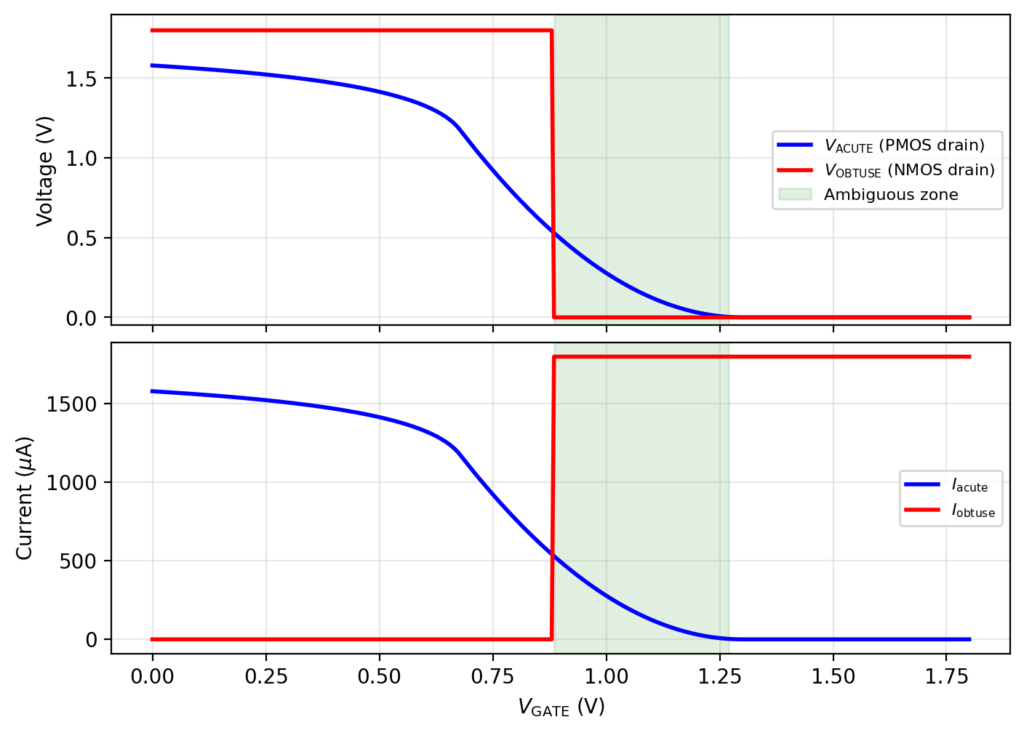
When the PMOS drain and NMOS drain are physically isolated, both carry current simultaneously and independently. One gate voltage controls the ratio between them continuously.
One device. Two outputs. The middle zone is not a defect. It is the feature.
From that one change, four applications emerge:
A voltage-programmable transistor that selects PNP, NPN, or dual-output mode at runtime from a single gate voltage.
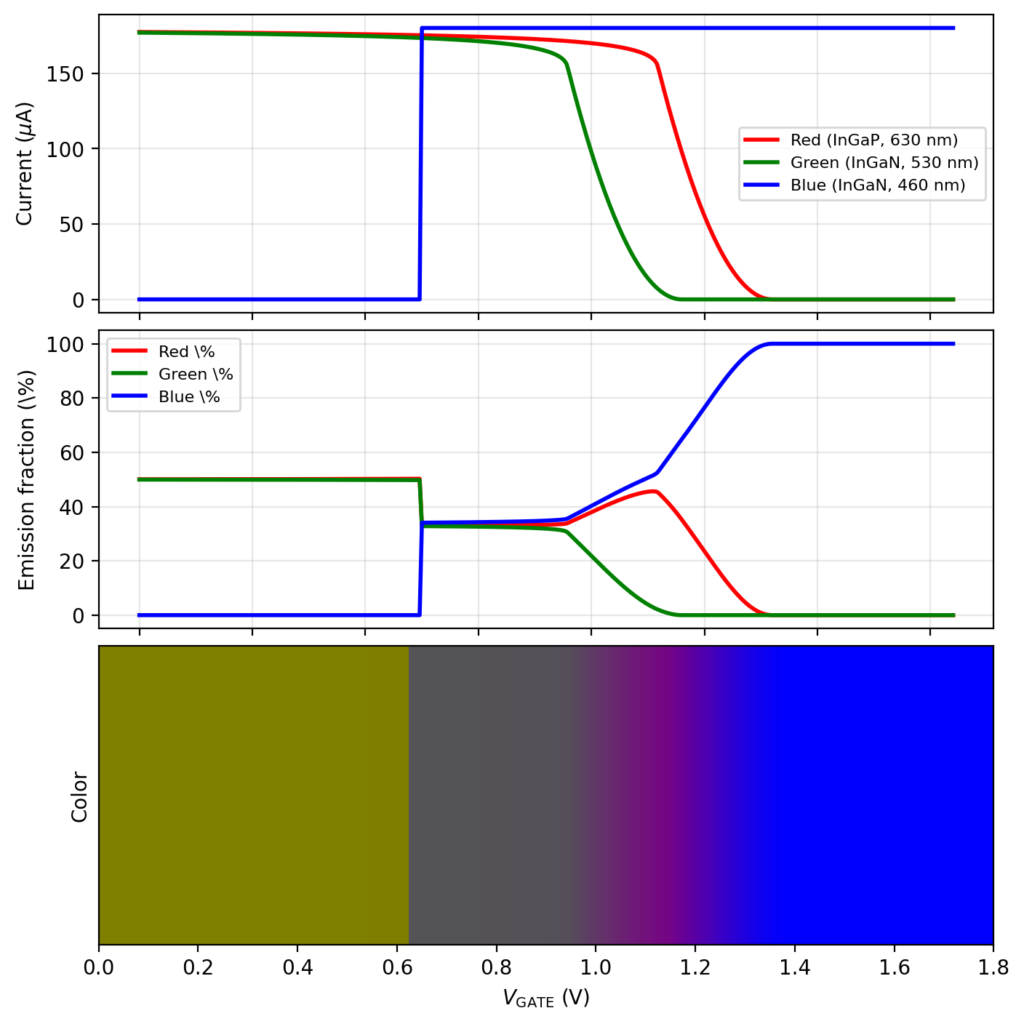
A single-device RGB LED that produces red, green, and blue light simultaneously from three separated terminals — no mass transfer, no separate dies, continuous analog color.
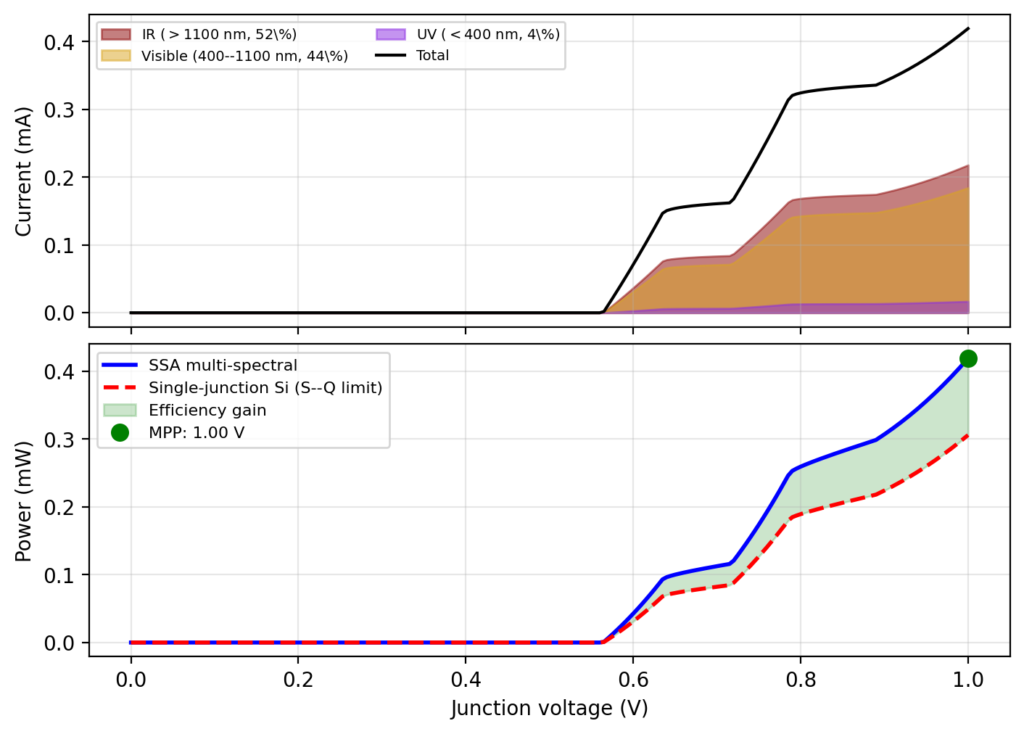
A multi-spectrum solar cell that sorts photons by energy into three drain terminals, approaching multi-junction efficiency at silicon cost.
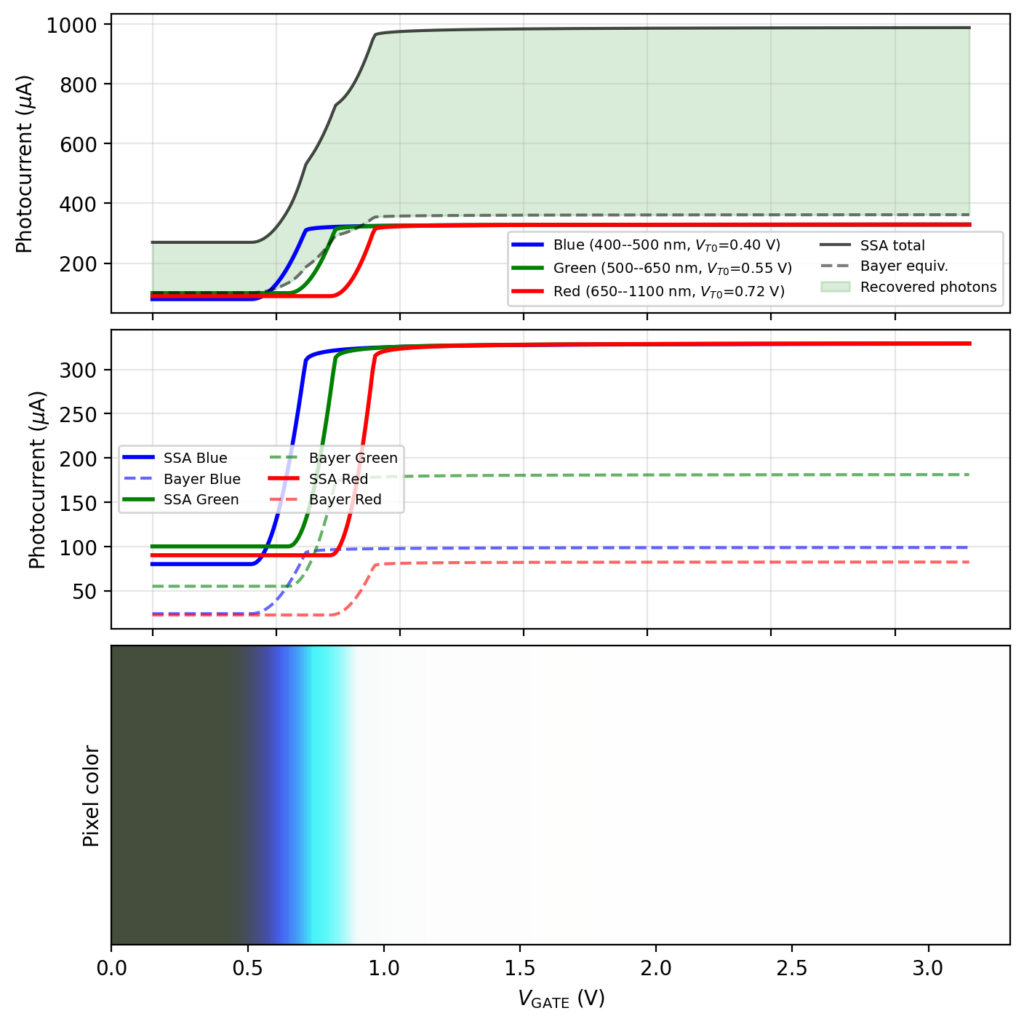
A filterless camera sensor that captures full RGB at every pixel simultaneously — no Bayer filter, no demosaicing, three times more photons.
All four verified in SPICE simulation. Provisional patent filed June 24, 2026 (CUNNANE-001-PROV). Silicon fabrication planned via Tiny Tapeout, September 2026.
Preprint: zenodo.org/records/20950316
Leave a Reply